
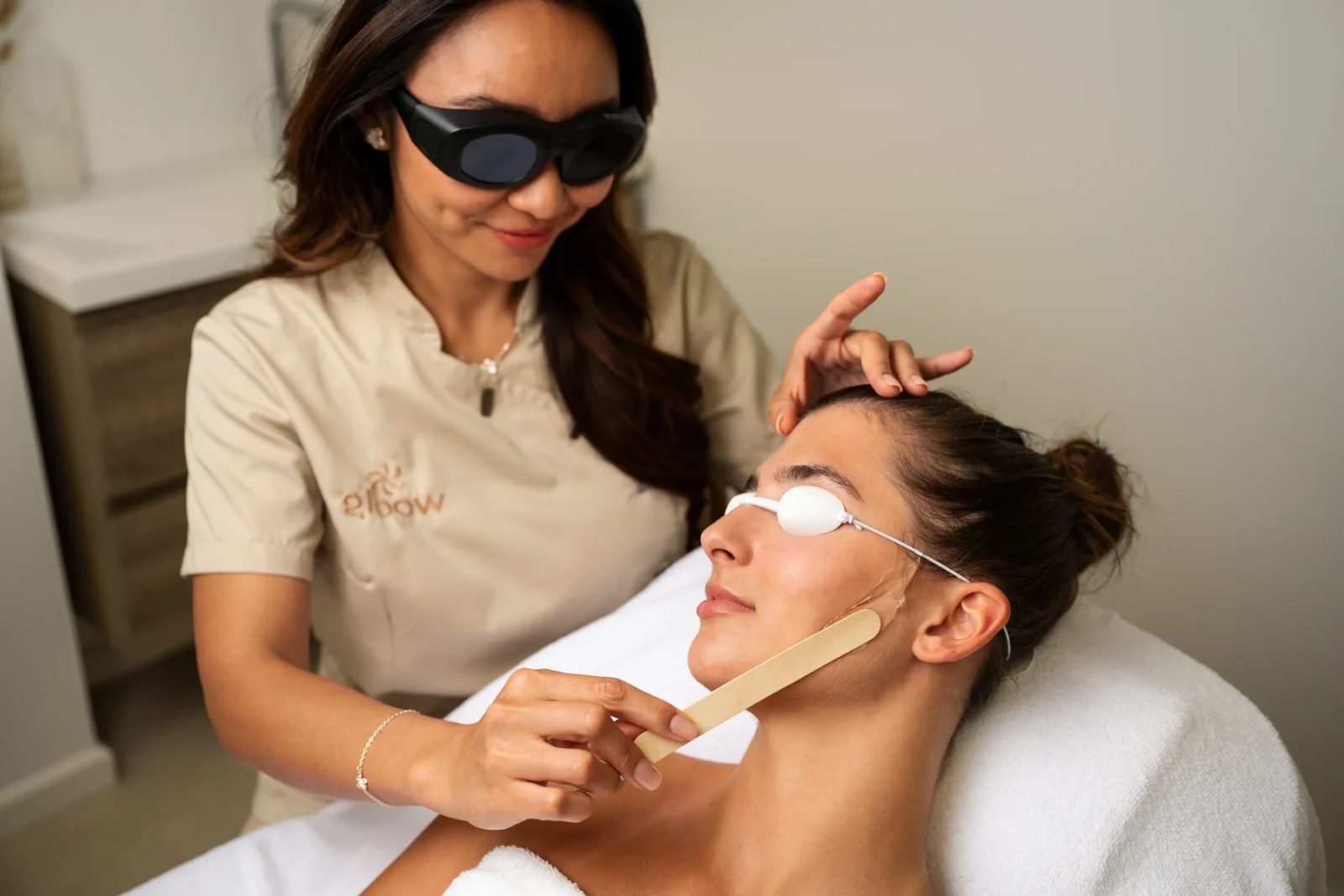
HydraFacial side effects are usually mild and short-lived: some redness, a feeling of tightness or warmth, and occasionally a few small breakouts in the days afterwards. Serious reactions are uncommon, but they can happen, especially on sensitive or already irritated skin, after strong retinoids or peels, or when hygiene is poor. Knowing what is normal makes it easy to spot what is not.
Normal reactions in the first 24 hours
The treatment combines exfoliating solutions, suction and extraction, so skin is mildly stimulated afterwards. Common, expected effects include:
- Redness or pinkness, often fading within a few hours
- Warmth or tingling, especially where exfoliating solutions were used
- Tightness, which usually settles once you moisturise
- Slight sensitivity to products you normally use without issue
If you had extractions on congested areas such as the nose and chin, those spots may feel a little tender for a day.

Less common side effects
| Side effect | Why it happens | What usually helps |
|---|---|---|
| Small breakouts (“purging”) | Congestion moving to the surface after extraction | Gentle cleansing, no picking; settles in days |
| Dryness or flaking | Exfoliation plus air conditioning | Bland moisturiser, pause active ingredients |
| Stinging with skincare | Freshly exfoliated surface | Skip acids and retinoids for a few days |
| Minor bruising or broken capillaries | Suction on fragile skin | Tell your therapist next time to lower suction |
| Flare of rosacea or eczema | Heat, suction or ingredients | Avoid treatment during flares; see a dermatologist |
| Allergic or irritant reaction | Sensitivity to a serum or booster | Stop products; seek medical advice if severe |
Most likely to react
- People using prescription retinoids or who recently took isotretinoin
- Anyone who had a peel, laser, waxing or threading on the face in the past week or two
- People with active rosacea, eczema, psoriasis or very reactive skin
- Anyone with a recent sunburn
When a reaction is not normal
Most HydraFacial reactions fade within a day. Some signs need prompt attention.
Contact the clinic or a doctor if you notice
- Redness, swelling or burning that worsens after 24 hours instead of improving
- Blisters, raw or weeping areas
- Hives, widespread itching, or swelling of the lips or eyes
- Pus, yellow crusting, increasing warmth or fever, which may indicate infection
- A cluster of painful small blisters, which may be a cold sore flare
If you have difficulty breathing or significant facial swelling, seek emergency care immediately.
A glow is normal. Pain is not. If your skin feels worse on day two than on day one, get it checked.
Side effects by skin type
Oily and acne-prone skin tends to tolerate the treatment well but is the most likely to notice a few spots afterwards as congestion surfaces. Resist the urge to squeeze them, which raises the risk of dark marks.
Dry or dehydrated skin may feel tight or flaky for a day or two, especially in air-conditioned rooms. A richer moisturiser and a pause on exfoliating products usually solve it.
Sensitive and rosacea-prone skin is the most likely to stay red for longer or to flare. Ask for lower suction, gentler solutions and no heat-based add-ons, and avoid booking during an active flare.
Medium to deep skin tones can develop post-inflammatory darkening if the skin is irritated or picked. Gentle extraction and strict sun protection afterwards help prevent this.
Pregnancy and HydraFacial
Many clinics treat pregnant clients with modified protocols, while others prefer to avoid exfoliating solutions containing acids during pregnancy. There is limited specific research. If you are pregnant or breastfeeding, discuss it with your doctor first and tell the clinic so they can adjust the serums they use.
How to reduce the risk of side effects
Before your appointment:
- Stop retinoids and exfoliating acids for a few days, or as your clinic advises.
- Avoid waxing, threading, peels and laser on the face for at least a week or two.
- Tell the therapist about every medicine and skincare product you use, including isotretinoin, even if you stopped recently.
- Mention any history of cold sores, rosacea or allergies.
After your appointment:
- Use a gentle cleanser and a plain moisturiser for a day or two.
- Skip makeup for the rest of the day if you can.
- Avoid saunas, hot yoga, steam rooms and intense exercise for 24 hours.
- Wear broad-spectrum sunscreen and keep out of strong sun. In the UAE, that means shade and a hat even on short outdoor trips.
Hygiene matters too
Some side effects, such as infection, are linked to how equipment is handled. On the genuine HydraFacial system, tips are designed to be single-use. Ask whether your tip is new and opened from sealed packaging, and whether the handpiece is cleaned between clients. In Dubai, clinics and healthcare professionals are licensed by the Dubai Health Authority; beauty centres are licensed separately by local authorities.
Planning around events
Because small breakouts and redness can happen, do not book your first ever HydraFacial right before a wedding or major event. Try it several weeks ahead, then book the final session a few days before the date. Our pre-wedding beauty timeline shows the ideal spacing, and the makeup artist booking checklist helps you coordinate with your makeup artist.

Frequently asked questions
How long does redness last after a HydraFacial?
Usually a few hours, and rarely more than a day. If redness worsens after 24 hours, contact your clinic.
Is it normal to break out after a HydraFacial?
A few small spots can appear as congestion clears, typically settling within days. Widespread or painful breakouts should be reviewed by a dermatologist.
Can a HydraFacial cause burns?
It is not a heat-based treatment, so burns are not expected. Stinging, rawness or blistering suggests irritation or a reaction and should be checked.
Can I use retinol after a HydraFacial?
Most clinics suggest waiting a few days before restarting retinoids and exfoliating acids, to give the skin time to settle.
Sources: American Academy of Dermatology, HydraFacial official site, DermNet
Cover photo: Gloow europe, CC BY 4.0. Last reviewed: 2026-11-25. General information only, not medical advice. Please consult a licensed practitioner in the UAE about your own situation.