
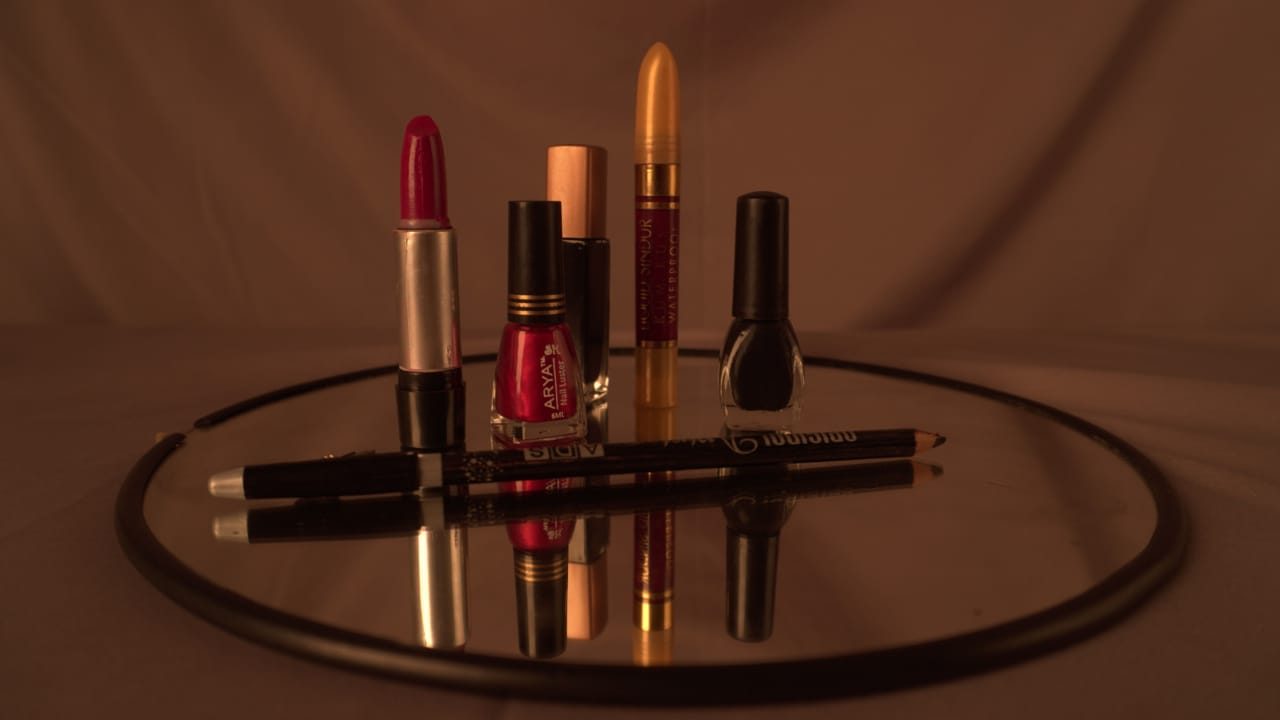
The makeup dermatologists generally suggest for acne-prone skin is labelled non-comedogenic or “won’t clog pores”, oil-free, and fragrance-free where possible, in light layers that you remove fully every night. Mineral powder foundations and lightweight liquid formulas often suit breakout-prone skin better than heavy creams. Makeup can cover acne well, but treating the acne itself needs a separate plan, ideally with a dermatologist months before your wedding.
Can makeup make acne worse?
It can, but it does not have to. Some ingredients and heavy, occlusive textures can clog pores in people who are prone to breakouts. Leaving makeup on overnight, using dirty brushes and sponges, and rubbing or picking at spots all make things worse. Well-chosen products, applied and removed correctly, are usually fine to use daily.
Labels to look for
| Label | What it suggests | Notes |
|---|---|---|
| Non-comedogenic | Formulated not to clog pores | Not a guarantee for every person |
| Oil-free | No added oils in the formula | Helpful for oily skin |
| Fragrance-free | No added fragrance | Reduces irritation risk |
| Non-acnegenic | Tested not to cause acne | Wording varies by brand |
| Mineral makeup | Often based on minerals such as zinc oxide and titanium dioxide | Many people with sensitive skin find it gentle |
These labels are a starting point. Everyone’s skin is different, so patch-test any new product, and introduce one at a time.

Product by product
Primer
Many people with acne-prone skin can skip primer. If you use one, choose a light, oil-free version. Some silicone-based primers smooth texture without clogging pores, but test carefully.
Foundation
Lightweight liquid or mineral powder foundations are often well tolerated. Build coverage in thin layers rather than applying one heavy layer. A foundation with SPF can help, but apply a separate sunscreen if you are outdoors for long, as most people do not use enough foundation to get the labelled protection.
Concealer
Use a thin layer only on spots and redness. A green-tinted corrector can neutralise redness under foundation. Pat it on with a clean brush or fingertip; do not rub.
Powder
A light dusting of loose or mineral powder helps control shine through a long day, which matters in UAE heat and humidity.
Blush and bronzer
Powder formulas are usually better than creams for oily, acne-prone skin.
Clean tools are part of the formula
Wash brushes and sponges often, and replace sponges regularly. Bacteria and oil build up on tools and transfer back to your skin.
Applying makeup over active acne
- Start with clean, moisturised skin. Even oily skin needs a light, non-comedogenic moisturiser.
- Apply sunscreen if you are going outdoors.
- Use foundation thinly, building only where needed.
- Spot-conceal with a small brush.
- Set with a little powder.
- Avoid touching your face through the day.
Cover in thin layers, remove completely, and treat the acne separately.
Removing makeup properly
Take makeup off every night, even when you are tired. A gentle cleanser is usually enough. If you wear long-wear or waterproof makeup, a micellar water or a light cleansing oil or balm followed by a gentle cleanser can help. Avoid scrubbing hard, as friction irritates acne.
Planning ahead for your wedding
If you have acne that does not respond to over-the-counter products, book a dermatologist appointment early, ideally six months or more before the wedding. Prescription treatments often take weeks to show results, and some have side effects like dryness or initial flares. Our pre-wedding beauty timeline suggests when to start.
Tell your makeup artist about your acne and any treatments you use, such as retinoids or benzoyl peroxide. These can make skin more sensitive, flaky or reactive, and the artist may need to adjust skin prep and products. Our makeup artist booking checklist includes this question.
Who should see a dermatologist rather than relying on makeup
- People with painful, deep or cystic acne
- Anyone whose acne leaves scars or dark marks
- People whose acne started suddenly in adulthood or comes with other symptoms such as irregular periods or excess hair growth
- Anyone who is pregnant or planning pregnancy, since some acne treatments are not suitable then
Stop a product if you develop burning, swelling, blistering or a spreading rash, and see a licensed doctor or dermatologist in the UAE. Seek urgent help for swelling of the lips or eyes or any breathing difficulty.
Dealing with a breakout in the final week
Even with good planning, a new spot can appear just before the wedding, often triggered by stress, late nights or changes in diet and sleep. Resist the urge to squeeze it. Picking pushes inflammation deeper, can leave a dark mark that lasts for weeks, and creates a broken surface that makeup struggles to cover smoothly.
Instead, keep the area clean, use only the treatment products your skin already tolerates, and let your makeup artist know so they can plan coverage. A small hydrocolloid patch overnight can help protect a spot from picking, though it will not make it disappear. For a large, painful spot, some dermatologists offer in-clinic treatment that can reduce swelling quickly. If that is something you might want, ask your dermatologist about it at an earlier appointment so you know whether it is suitable for you and how much notice the clinic needs.
On the morning itself, a calm, well-moisturised base makes concealing far easier than skin that has been scrubbed or dried out the night before.
Common myths
“Oily skin does not need moisturiser.” Dehydrated skin can produce more oil. A light, non-comedogenic moisturiser usually helps.
“Makeup should be avoided completely if you have acne.” Most people can wear suitable makeup. What matters is product choice, hygiene and removal.
“Toothpaste dries out spots.” It can irritate skin and is not a recommended treatment.
FAQ
Is mineral makeup good for acne-prone skin?
Many people with acne-prone or sensitive skin find mineral powder makeup gentle. It is still worth patch-testing.
Does non-comedogenic mean it will not cause breakouts?
It means the product is formulated to avoid clogging pores, but individual reactions can still happen.
Can I wear makeup while using prescription acne treatment?
Usually yes, with gentle products. Ask your dermatologist about the right routine for your treatment.
How far before my wedding should I treat acne?
Ideally six months or more, so treatments have time to work and any side effects can settle.
Sources: American Academy of Dermatology on acne and makeup; British Association of Dermatologists; Dubai Health Authority.
Cover photo: Bairavi Arjunan3, CC BY-SA 4.0. Last reviewed: 2026-11-25. General information only, not medical advice. Please consult a licensed practitioner in the UAE about your own situation.